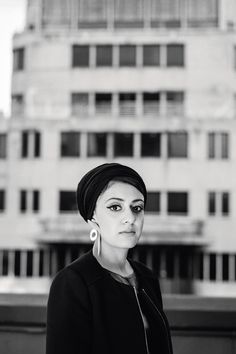
South African architect Sumayya Vally is emerging as one of the most influential voices in contemporary architecture, using design to explore identity, memory, culture, and the ways communities come together.
The founder and principal of Counterspace, Vally has built an international reputation for a practice that moves beyond conventional architecture, combining research, art, curation, and spatial design. Her work draws extensively on African and Islamic histories, overlooked communities, and the traces left by migration and cultural exchange.
Her global profile rose sharply after she was selected to design the 2021 Serpentine Pavilion in London, making her the youngest architect commissioned for the prestigious project. The pavilion brought together fragments and influences from London's diasporic communities, reflecting Vally's interest in gathering places and collective memory.
A New Chapter in 2026
Vally's influence has continued to expand this year. She was named a 2026 Art Basel Awards medallist in the Cross-Disciplinary Creator category, placing her alongside internationally recognised figures from art, culture, and creative practice. Art Basel highlighted her work as part of a generation redefining the boundaries between architecture and other creative disciplines.
At the inaugural Art Basel Qatar in February, Vally presented In the Assembly of Lovers, a large-scale installation inspired by historic gathering spaces across the Muslim world.
The work brought together references ranging from Córdoba and Gaza to Beirut and Qatar, transforming the traditional idea of the majlis into a changing space for conversation, performance, and collective experience.
Rather than functioning simply as a static architectural object, the installation was designed to change configuration and host gatherings, reinforcing one of the central themes of Vally's practice: architecture as a tool for creating connection.
Architecture as Memory
For Vally, architecture is not simply about buildings. Her work investigates what places remember and how communities preserve identity through spaces, rituals, and stories.
Counterspace describes her methodology as forensic, drawing on oral histories, sound, rituals, and overlooked elements as sources for historical research and creative production.
This approach has positioned her at an unusual intersection of architecture, contemporary art, and cultural research.
Shaping the Future of Architecture
Vally's growing influence was further highlighted in September 2026 when she joined the jury for the ArchDaily Next Practices Awards, which recognises architectural practices challenging conventional approaches to the profession.
Her career also includes serving as Artistic Director of the inaugural Islamic Arts Biennale in Jeddah in 2023, further demonstrating her ability to operate across architecture, art, and cultural institutions.
From Johannesburg to London and Doha, Vally is helping redefine what architecture can represent in a rapidly changing world.
Her work suggests that the future of architecture may not be defined only by taller buildings, new materials, or technological innovation, but by memory, identity, community, and the spaces that bring people together.
As her international profile continues to grow, Sumayya Vally is becoming not just an architect of buildings, but an architect of cultural memory and collective experience.